Ohio Golf Club
The Project
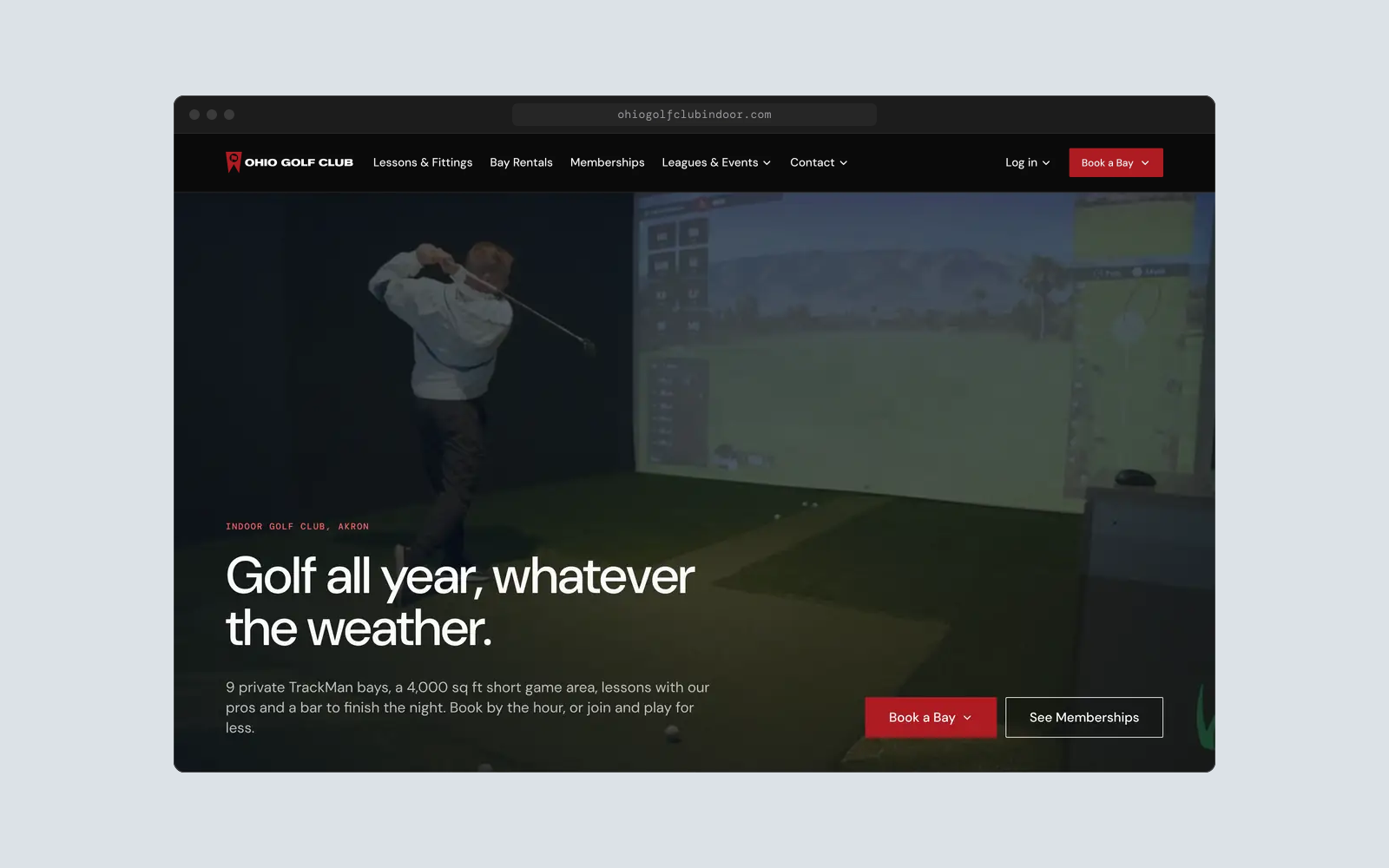
Ohio Golf Club Indoor is an indoor golf facility in Akron, Ohio, offering TrackMan simulators, lessons, memberships, leagues, and private events.
I redesigned and rebuilt the website from the ground up, creating a more cohesive experience for golfers while giving the business a better way to manage its growing content and offerings.
I used Claude Code throughout the build, directing the design, user experience, site architecture, and implementation. With AI handling much of the development work, I could spend more time on the decisions that mattered most: how the site should look, work, and grow with the business. The new site is live now.
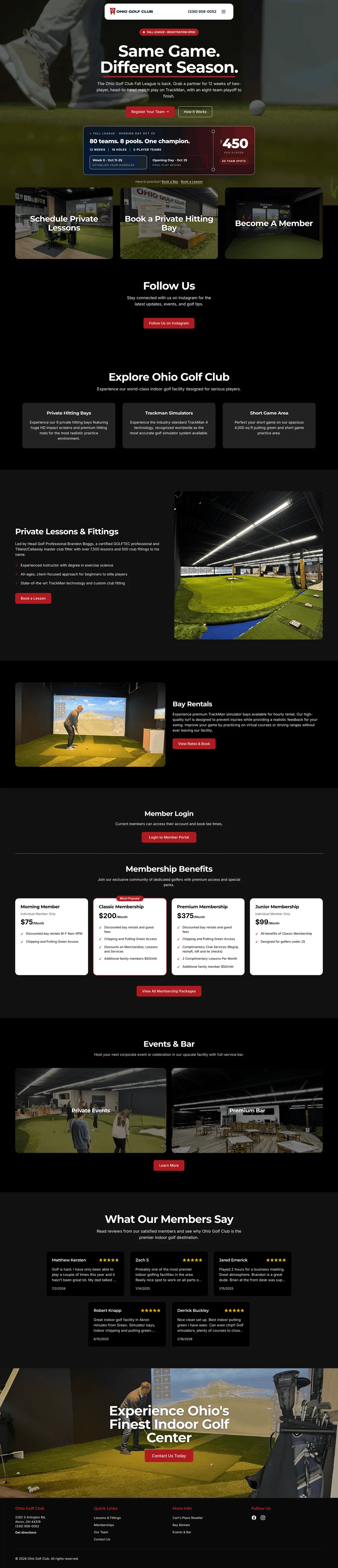
Before and after
The goal was to create a more cohesive, modern experience that makes it easier for visitors to explore the club, understand its offerings, and find what they’re looking for.

The challenge
The club had grown, and the website needed to grow with it. Lessons, memberships, leagues, and private events were all part of the business, with a second location on the way. The site’s six pages covered the basics, but there was room to give each offering its own space: five of the pages shared one title, and contact lived in a pop-up.
Golfers needed a clearer way to explore the facility, compare memberships and bay rates, find lessons, and see which leagues and events were coming up, often from a phone. The business needed a site that could keep up with it. Updates, from new hours to a new league, went through a developer, and the Fall League page was built as a one-off, so each new league would need a custom page of its own.
So the redesign had two jobs: make the club easier to understand and book, and make the site something the staff could keep current themselves.
A cohesive design system
I explored three brand directions and five versions of the home page before settling on a darker, more refined look that better reflects the indoor golf experience.
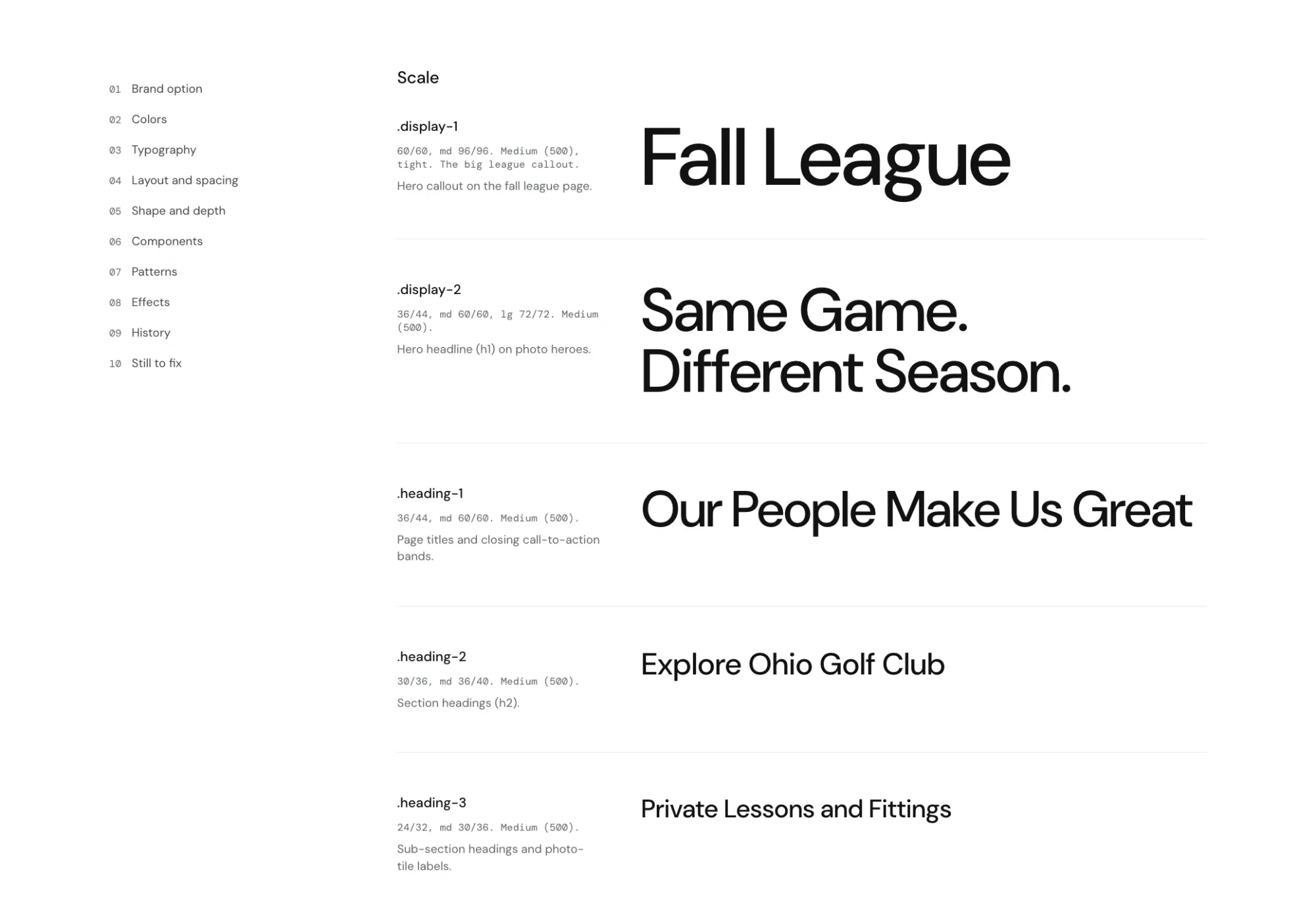
From there, I built a shared design system to keep every page consistent: two typefaces, DM Sans and DM Mono, a small set of color, spacing, and corner tokens, and a library of reusable components. New pages come together from the same parts instead of introducing one-off styles, and an internal style guide documents all of it and changes whenever the site does.
The result is a more recognizable identity and a site that can keep evolving as the business grows.
A better experience
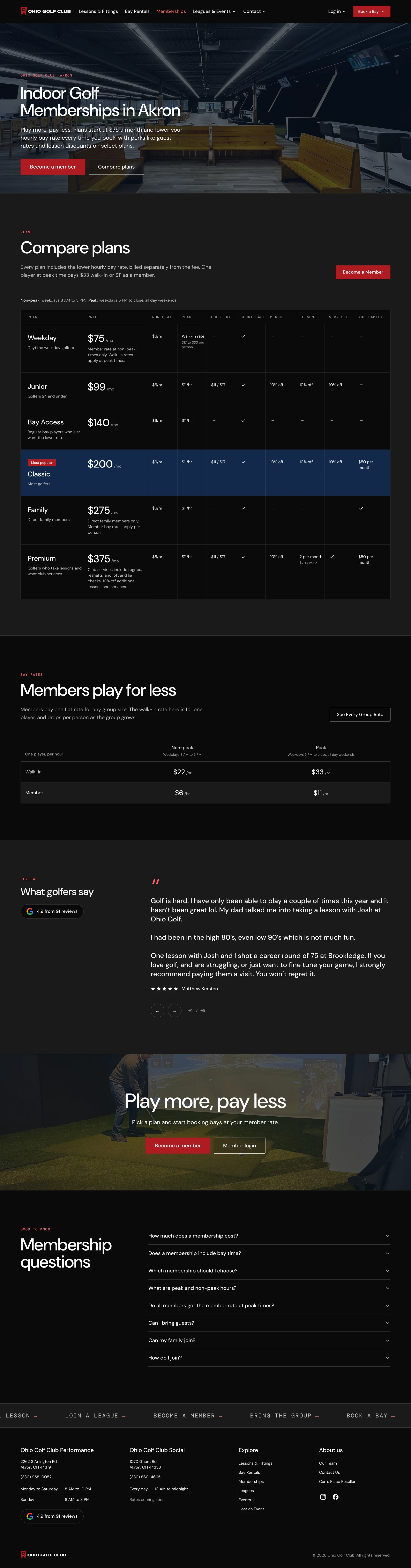
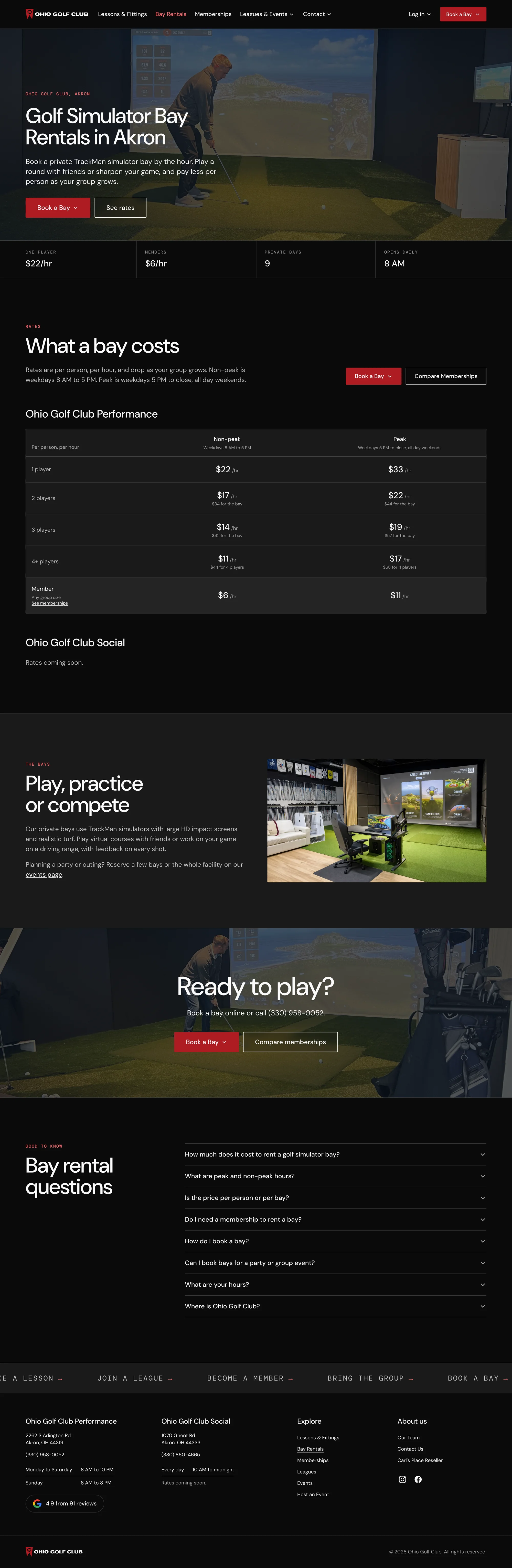
With the system in place, I reorganized the site around what visitors come to do. The navigation groups the club’s offerings into a few clear paths, Book a Bay sits in the header on every page, and memberships and bay rates are laid out so plans and prices are easy to compare.
Leagues and events
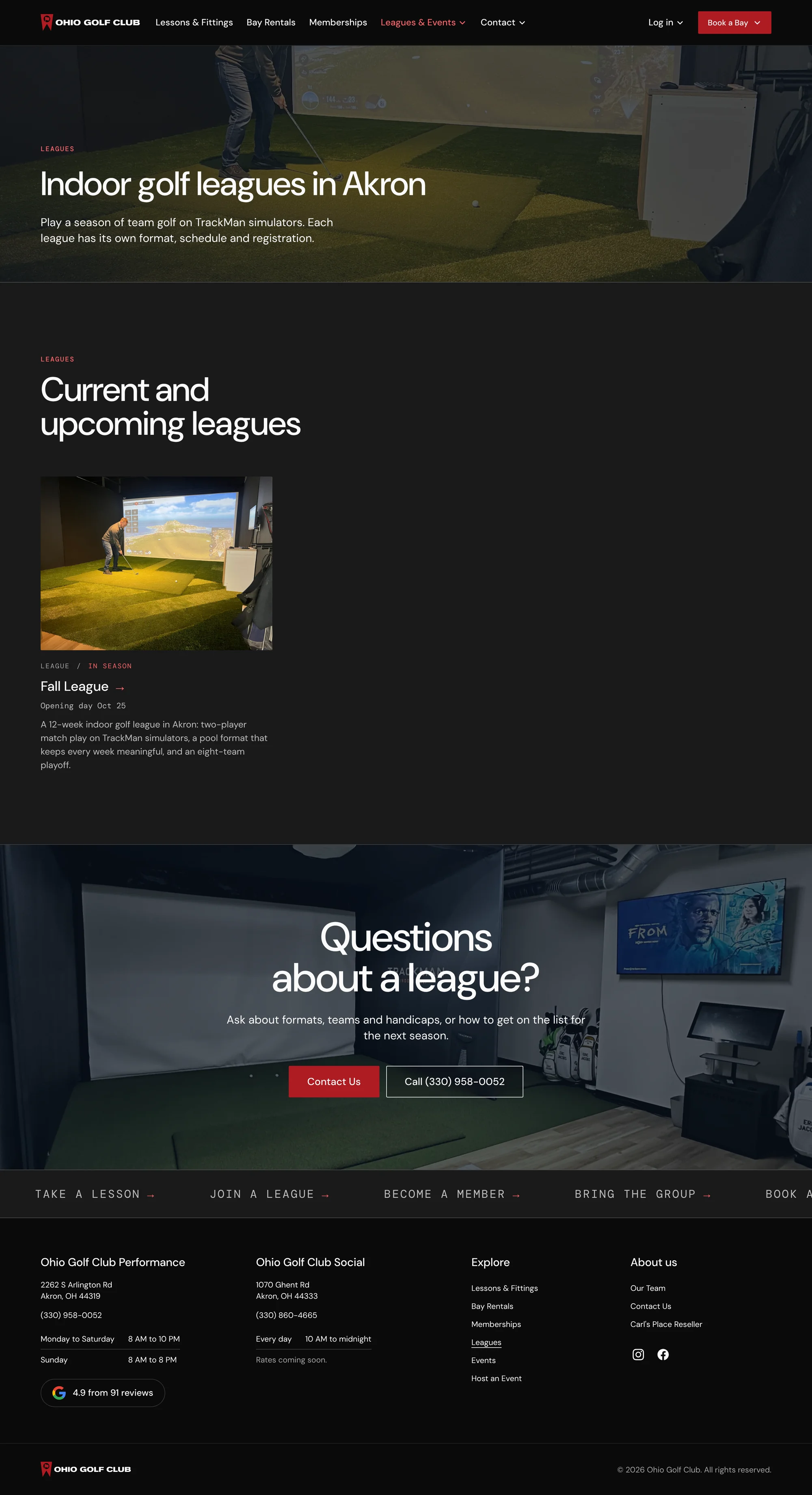
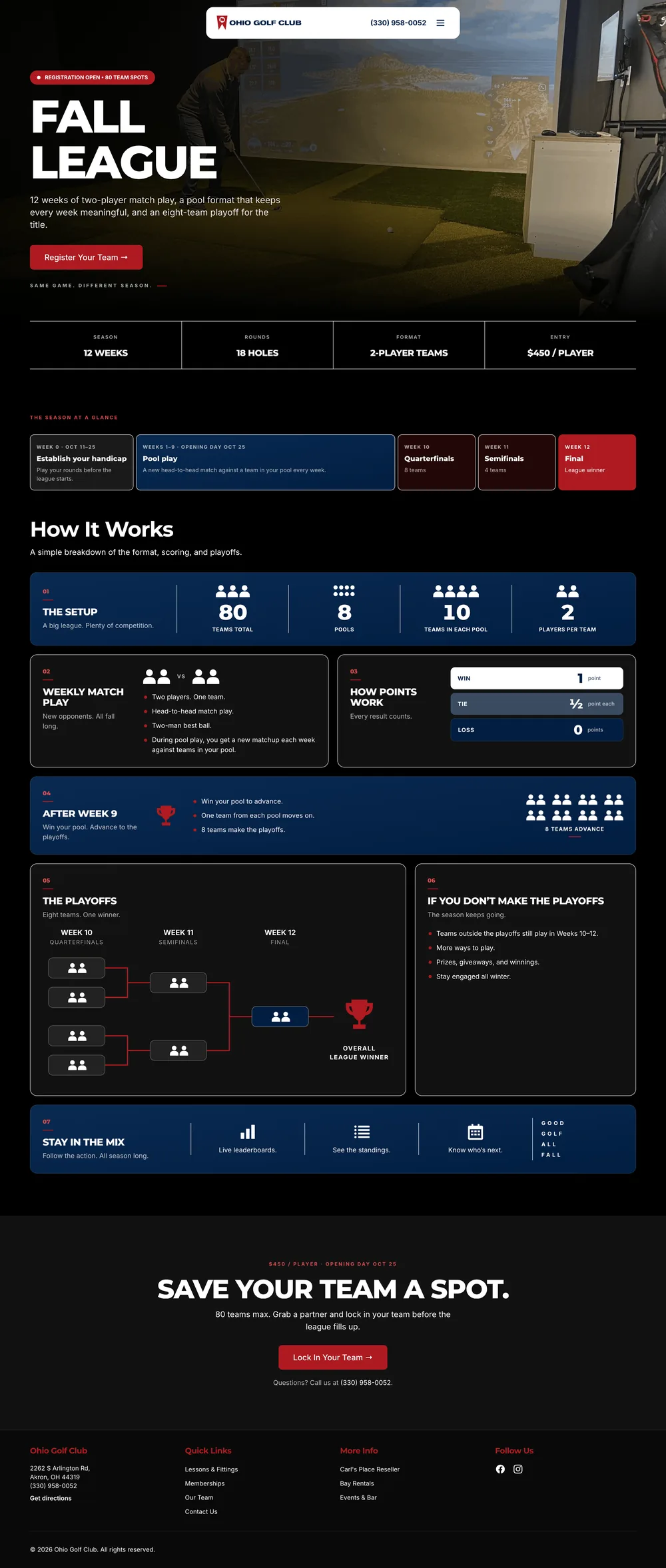
The Fall League page was already the most detailed on the site. I turned what worked there into one template for every league and event, so each gets the same clear layout: dates, format, how to sign up, and answers to common questions. Private events have a page of their own too, with the occasions the club hosts and a request form.

Contact and lessons on real pages
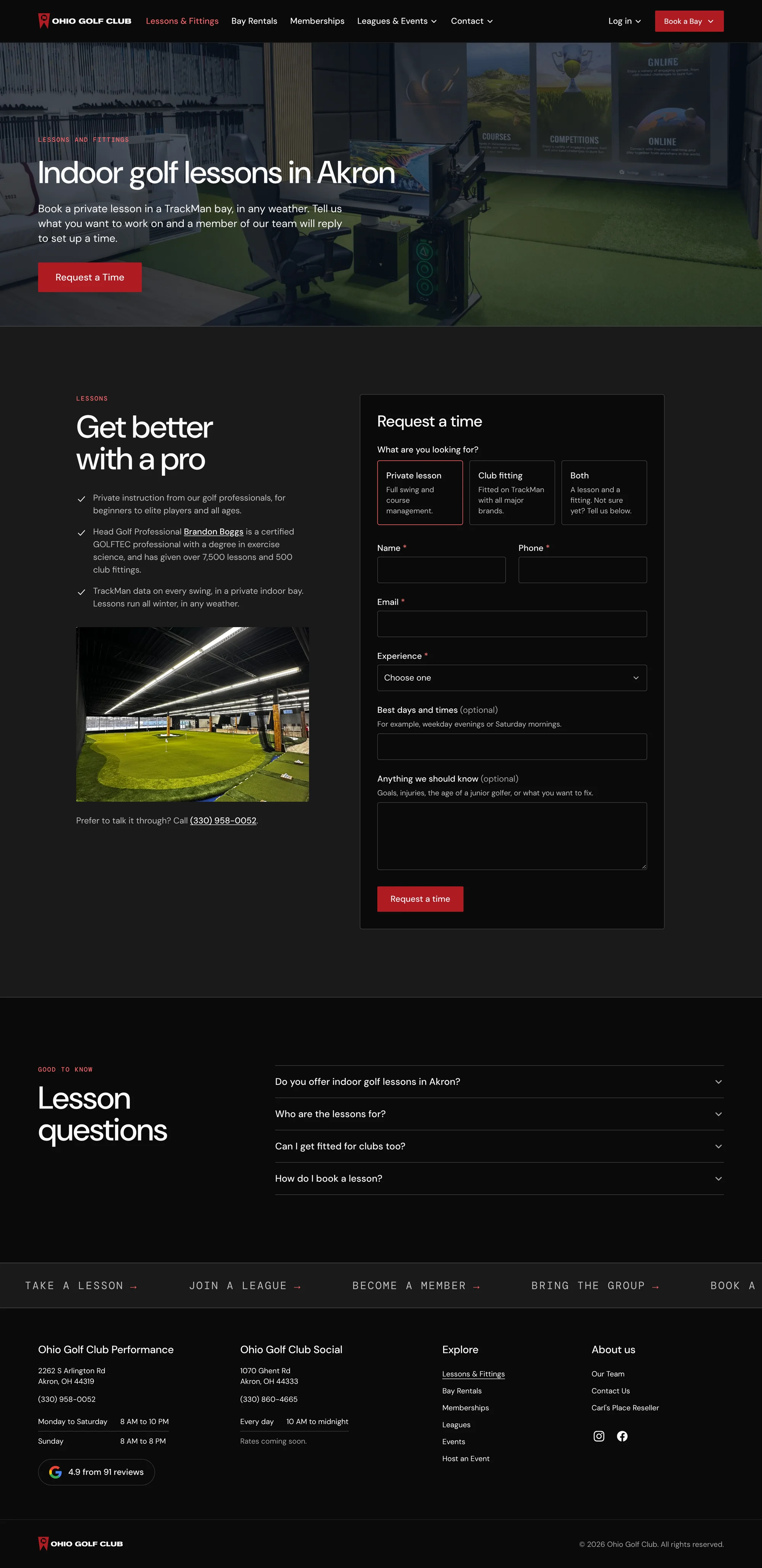
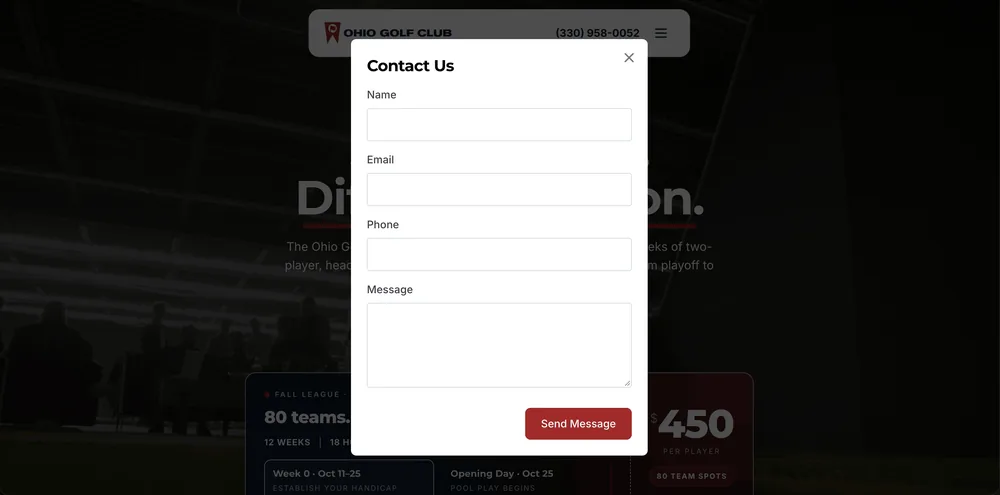
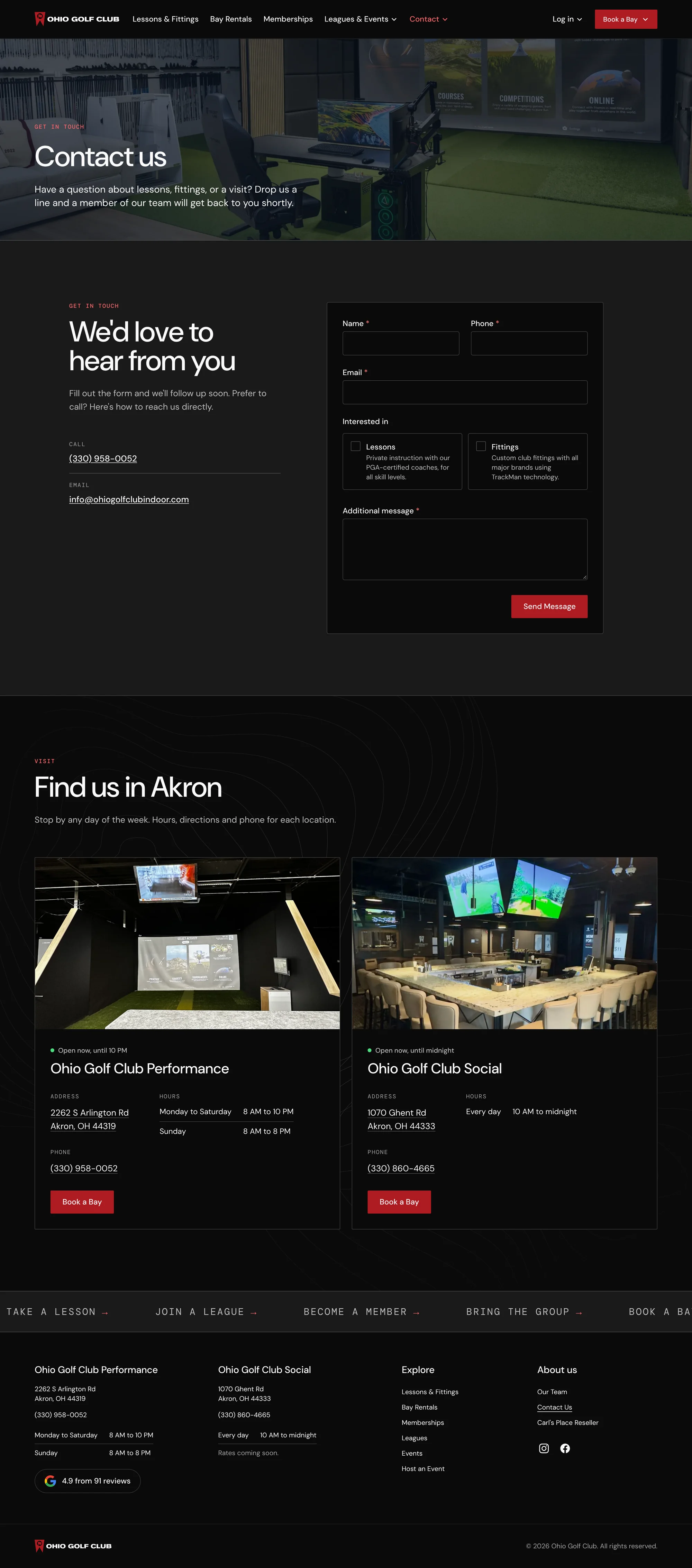
Contact used to be a pop-up. Now it’s a page with the form, hours, and directions together, and lessons have a page of their own. Unlike a pop-up, a page can be found in search, linked to, and bookmarked.
Designed for phones
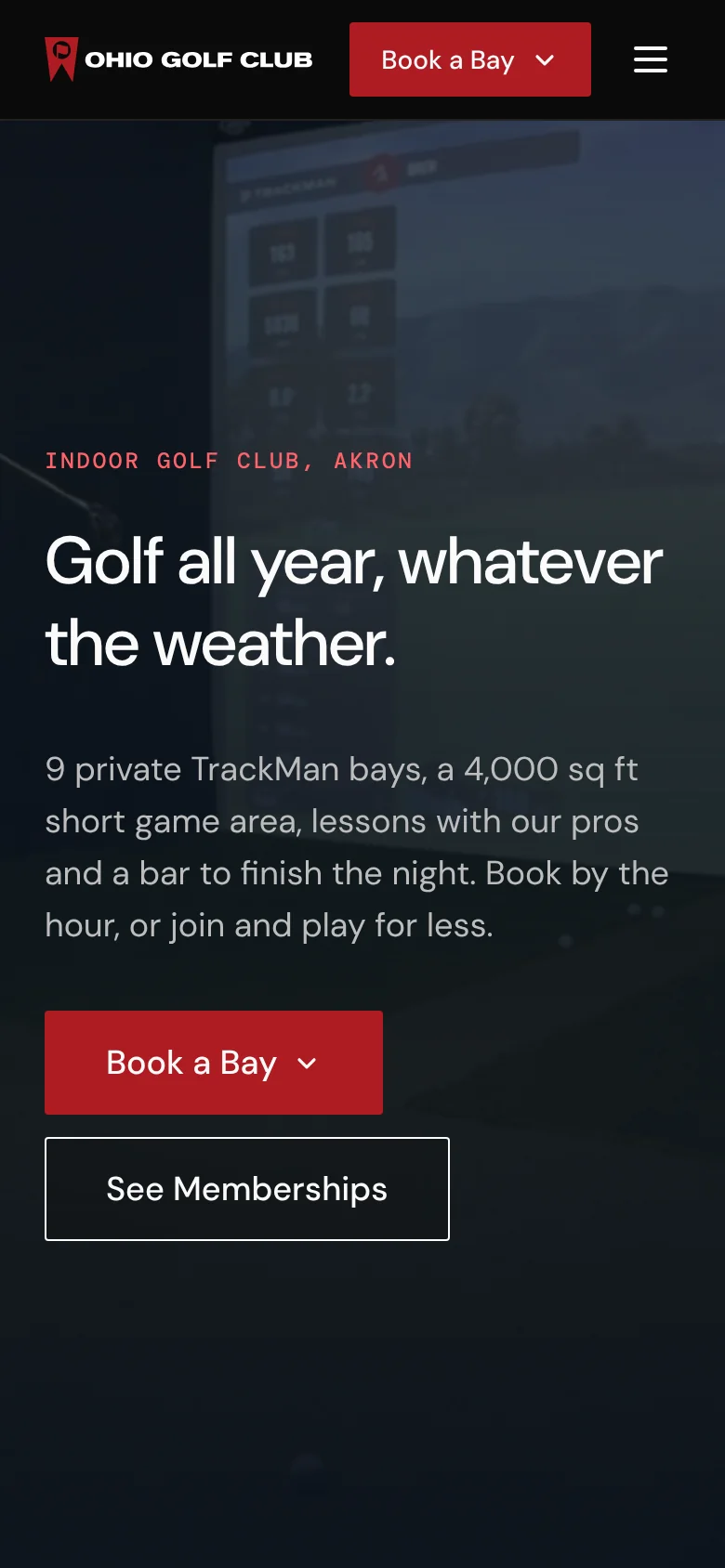
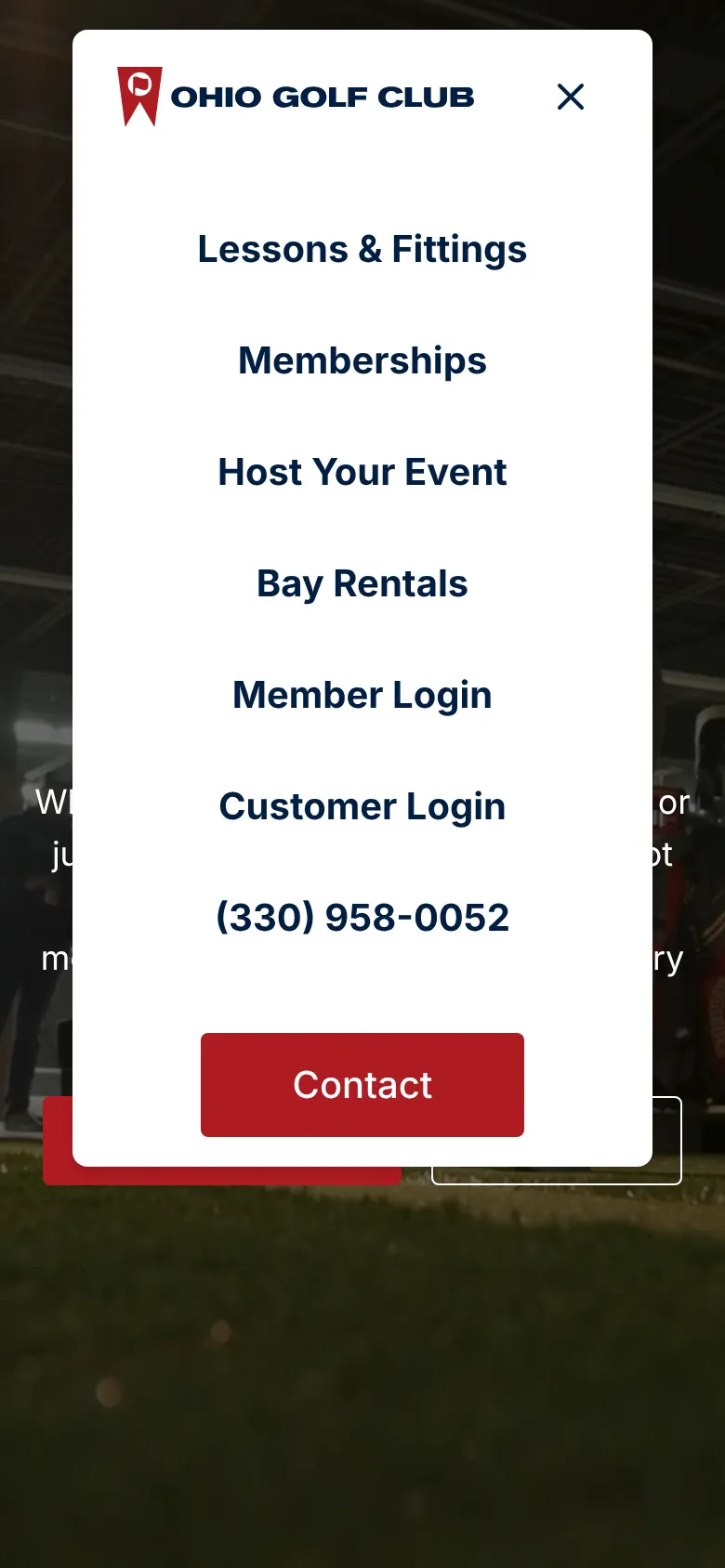
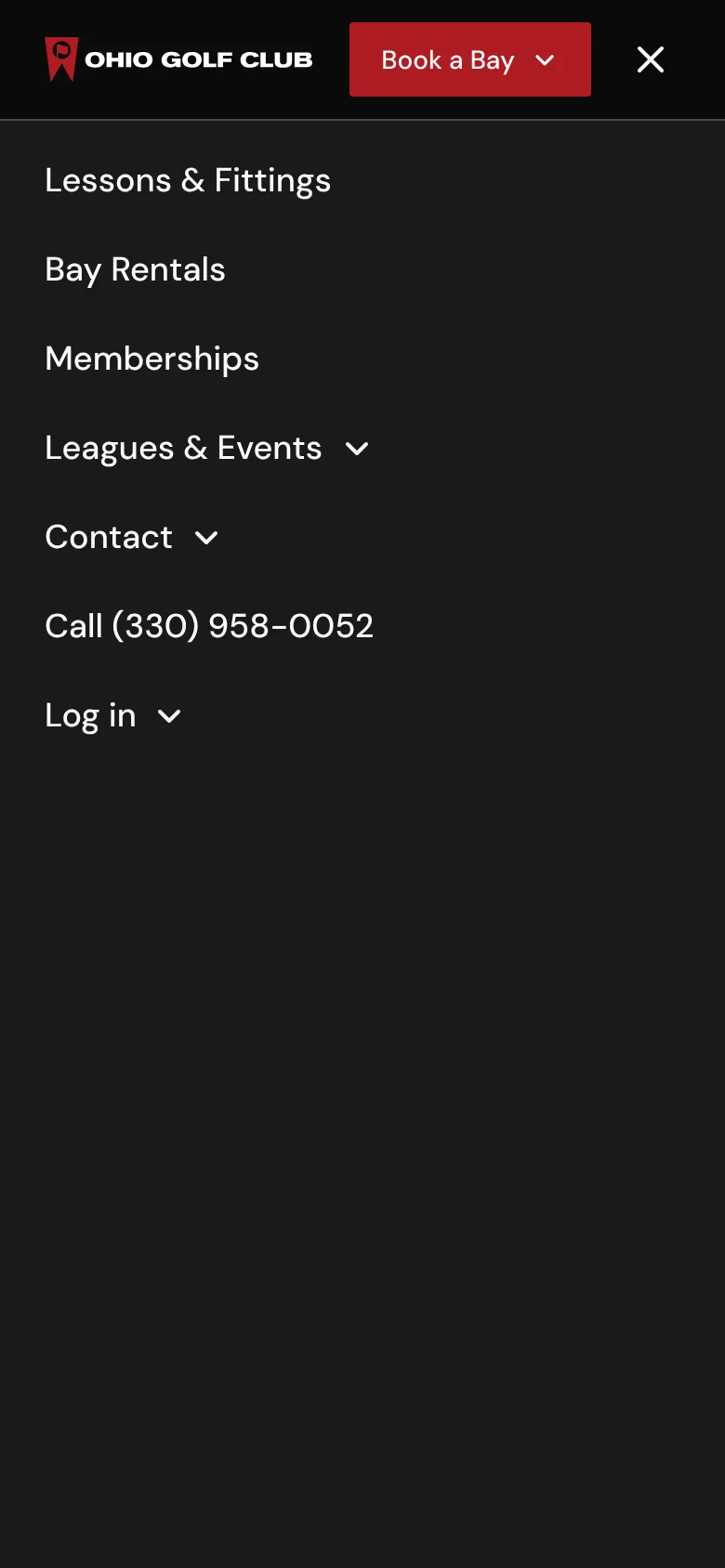
More than half of the people who find the site through search are on a phone, so I gave every page a mobile pass: tighter spacing, larger tap targets, and motion that turns off for anyone whose device asks for less. The menu needed the most care. With more pages to reach, a single list ran long on small screens, so the desktop dropdowns fold into sections that open in place, each on its own, so nothing jumps under your finger.

Built to grow with the business
Day-to-day updates, like new hours or a new league, still needed a developer. I wanted to give the club direct control over that content.
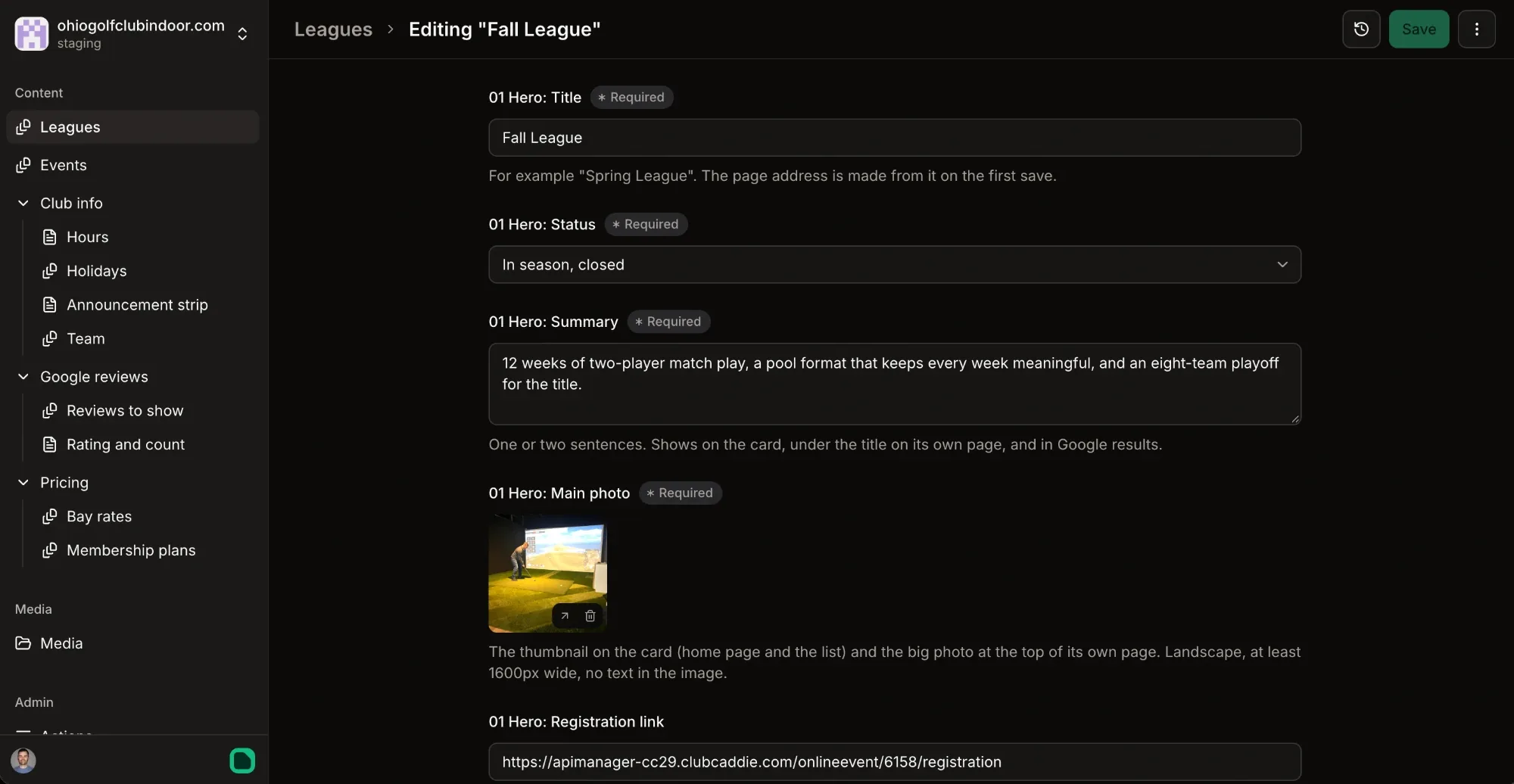
I designed the site architecture around reusable templates and set up Pages CMS, a free editor that saves straight into the site’s code, with no database or monthly fee. Staff now manage leagues, events, weekly hours, holidays, the announcement strip, bay rates, membership plans, Google reviews, and the team through simple forms. Page layouts and the main page copy stay in the code.
Rather than a new page for every league or event, the content follows a consistent structure. Staff fill in a form, and the site handles the rest: the page, its place in the listings, and the details search engines read. Every entry is checked when the site builds, so a mistake stops the update instead of breaking the live site.
That gives the business day-to-day flexibility, and because hours, holidays, and rates are already organized by location, the structure is ready for the second club they’ve announced.
A content changeNo developer involved
- Staff edit a form in Pages CMS
- The site rebuilds
- Every entry checked
- Live on the site
Search visibility
Search Console showed the club’s pages appearing more than a hundred times each for searches like “indoor golf” and “golf simulator near me” while earning few clicks. One clear opportunity: five of the six pages shared the same title.
That fix didn’t need to wait for the redesign. On October 23, 2026, I made a first round of technical SEO improvements to the existing site to give it a sounder foundation: a unique title and description for every page, one consistent address, a sitemap, and correct link previews.
The rebuild took it further, and search was part of the plan from the start, not a checklist item at the end. Lessons, contact, and private events each have their own page, with titles, descriptions, and copy shaped around what people were already searching for, and related pages link to each other. Structured data describes the business, its hours, every league and event, breadcrumbs, and common questions, so search engines can read those details directly.
The same groundwork is meant to help answer engines, AI tools like ChatGPT, Perplexity, and Google’s AI Overviews that respond to a question with a direct answer. Clear page structure, FAQs, and structured data make the club’s details easier for them to understand. That’s a foundation rather than a result: I haven’t measured how often the club appears in AI answers.
Google Search Console results compare the 28 days before the first update (September 25 to October 22) with the 24 days since (October 23 to November 15). Clicks went from 0.5 a day to 6.9 on average, and impressions from 38 a day to 239. The rebuild only launched on November 11, so most of that period reflects the work on the old site.
The gains have continued past the first few weeks. In the latest 28-day Search Console period, October 19 to November 15, the site earned 168 clicks from 5,895 impressions, a 2.85% click-through rate, at an average position of 10.8. The first four days of that period came before the first update.
The site is also beginning to appear more often for searches that don’t include the club’s name, such as “indoor golf near me,” “golf simulator near me,” “indoor driving range near me,” and golf lessons in the Akron area. That suggests it’s reaching people who weren’t already looking for the club by name. It’s still early, and these numbers aren’t proof of long-term growth.
The next step is measuring what that visibility leads to. I’m adding tracking to the actions that matter most to the business, including Book a Bay, contact, and inquiries about memberships, lessons, and events, so future updates can show how search turns into real inquiries rather than visits alone.
A different approach to building
I used Claude Code as an integral part of the development process, taking a hands-on approach to directing and reviewing the work. Rather than spending most of my time writing code, I focused on defining the experience, setting up the architecture, and deciding how the site should work. Claude helped turn those decisions into working components, pages, and CMS functionality, and helped me test, troubleshoot, and refine them along the way.
I started with an audit of the existing code and resolved a few issues before building anything new, including one that could keep contact form inquiries from arriving. Then I wrote the ground rules Claude follows in every session, kept in a CLAUDE.md file: build from shared components, name colors by their role, keep prices, hours, and FAQs in one place, and put accessibility first when goals conflict.
Every change went through a structured GitHub workflow: its own branch, a Vercel preview link to review it, a final check on a staging site, and a production release only when I signed off. That let me take the project from design through implementation while keeping control of the details that shape the final product.
Every changeNothing ships without review
- Its own branch
- Preview link
- Staging review
- Production
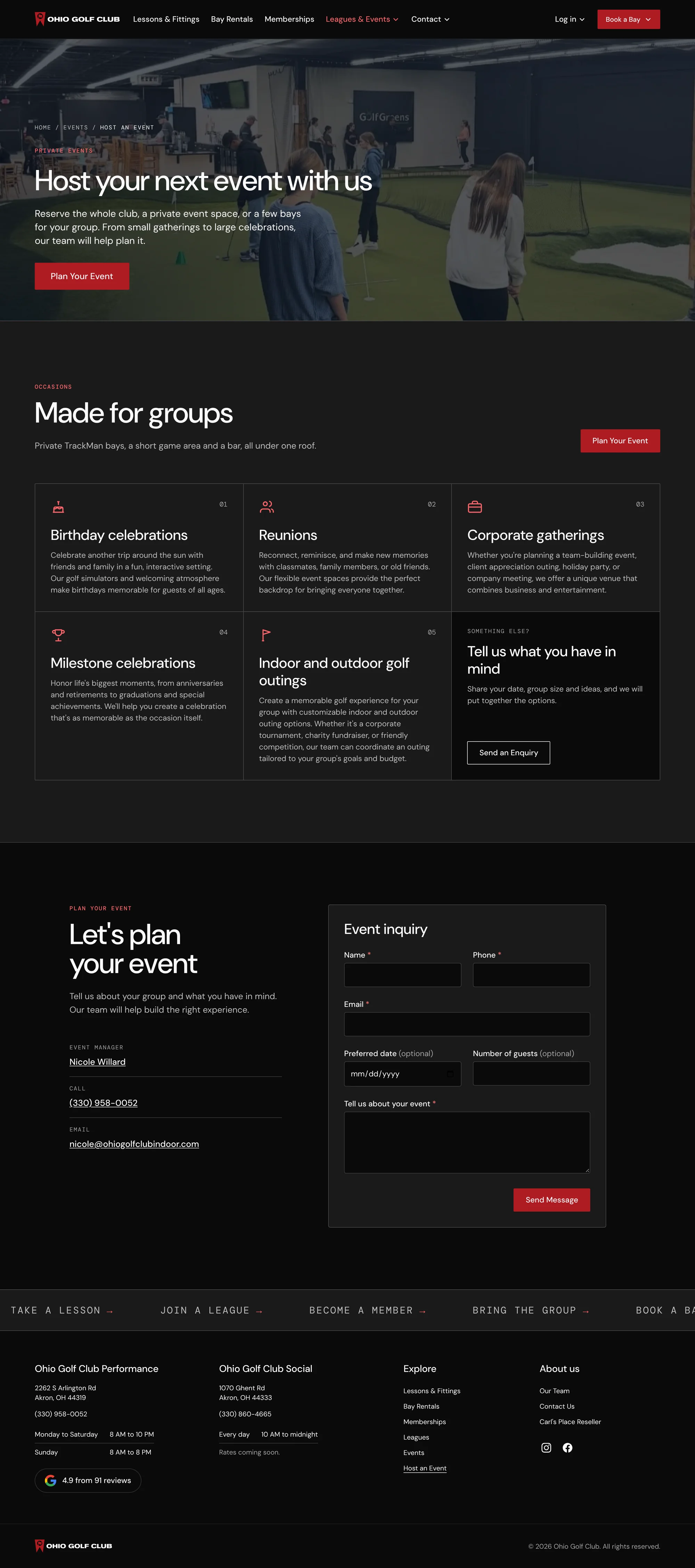
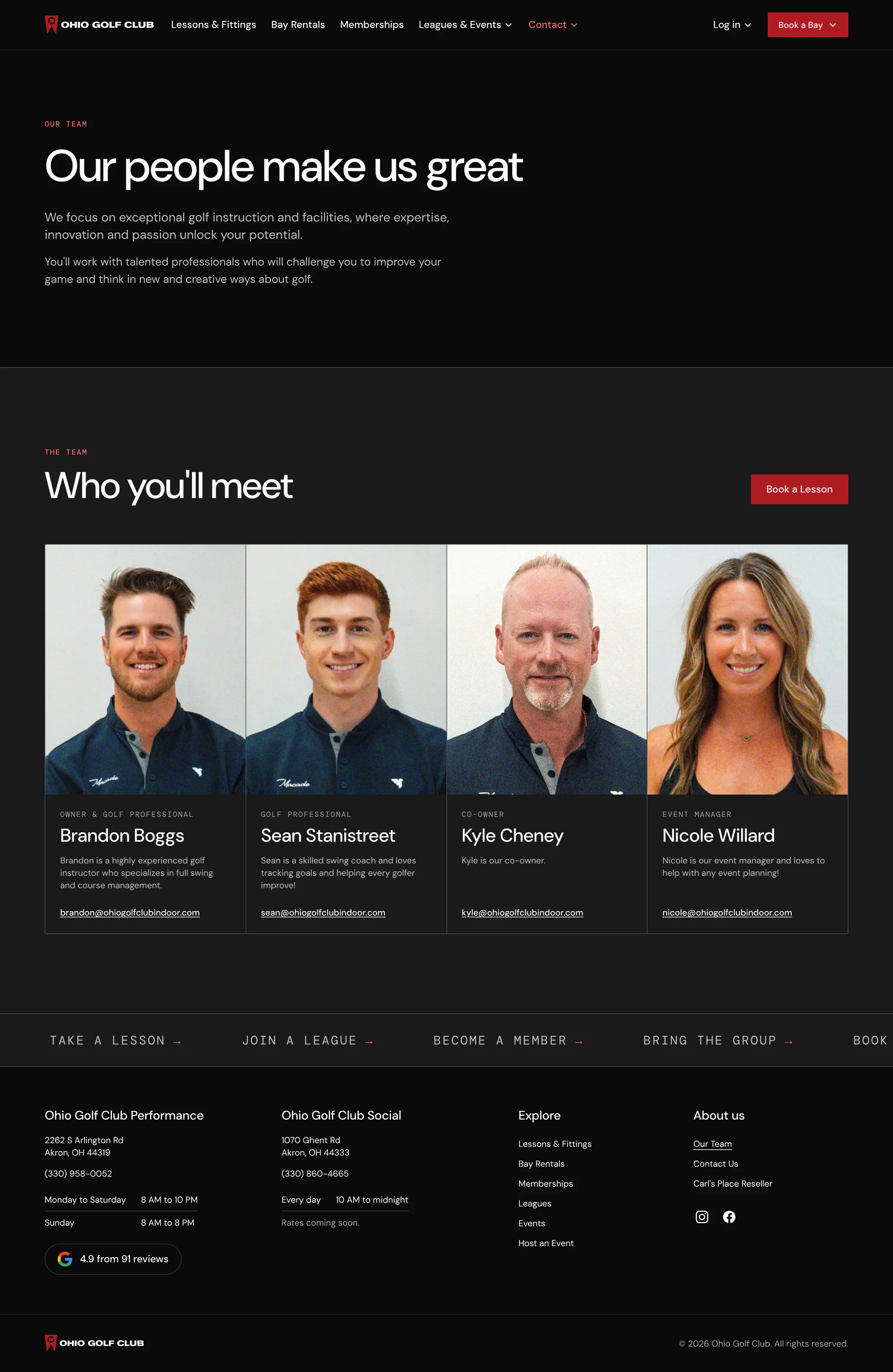
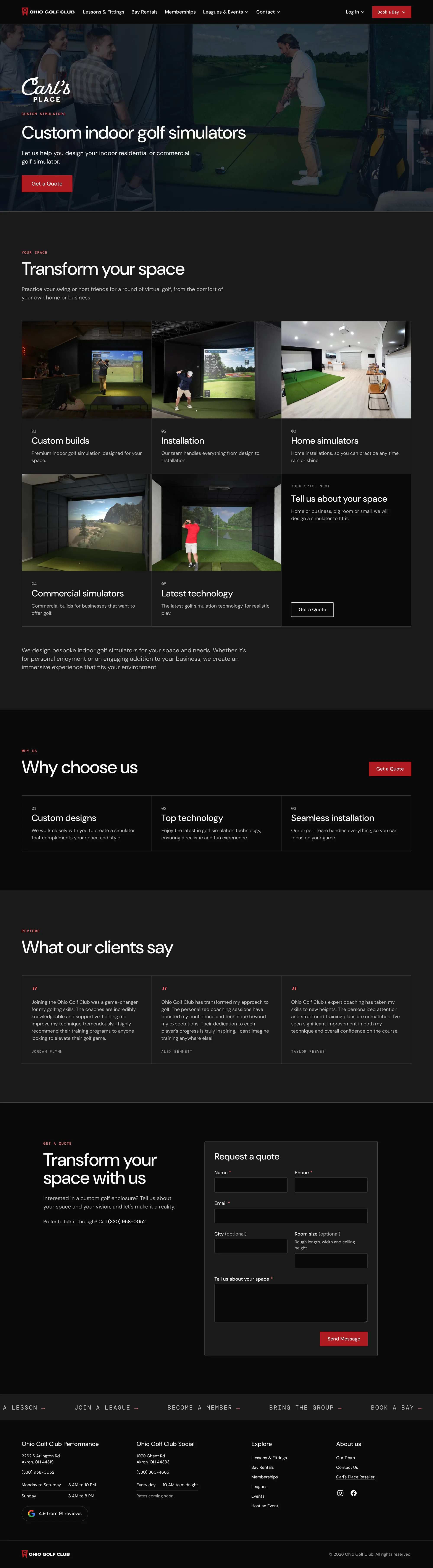
More of the new site
Memberships with plan cards and a comparison table, a lesson request page, the leagues list, bay rentals, private events, the team, and Carl’s Place, the club’s custom simulator business. Each slide shows the top of the page. Click an image to see the whole page.