MC Salon Spa & Studio
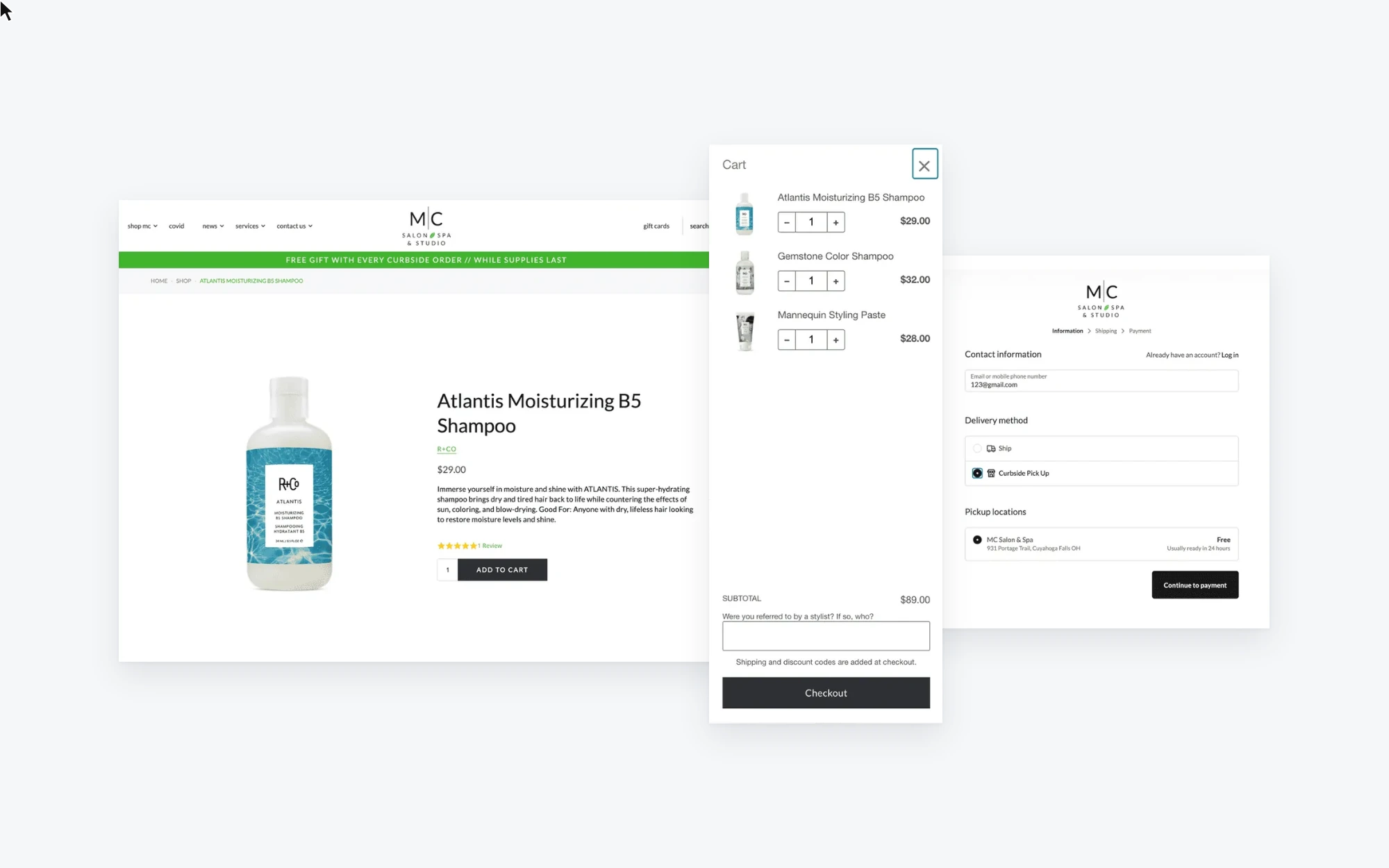
The Whole Salon in One Place
MC Salon Spa & Studio is a salon and spa with two locations, MC Salon & Spa and Studio MC. Their old site was a three-page Wix build: a homepage, a shop with a handful of products, and a contact page. It was hard for them to update, and once COVID hit they needed a lot more from it. They wanted to sell and ship hair products to clients and offer curbside pickup, so the online shop had to become a real part of the business.
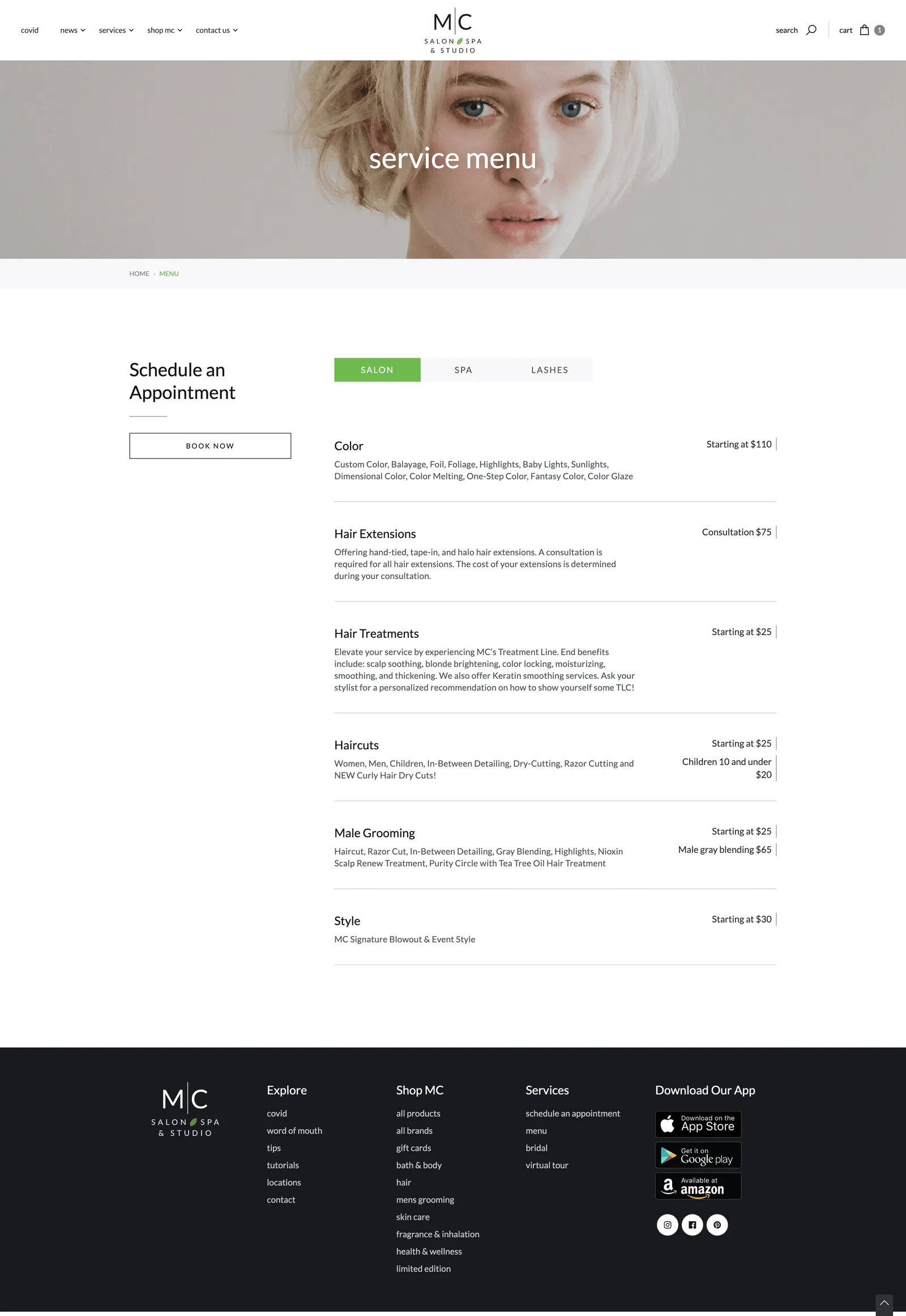
I designed and built a new site in Webflow that brought the whole salon online: the full service menu, from haircuts, color, and extensions to men's grooming, spa, and lash services, the stylists and staff behind it, both locations, and a store for the professional hair products the salon carries. The pieces were meant to work as one experience. A client could read about a service, find a stylist, book, and shop the products their stylist recommends without the site feeling like separate parts bolted together. After months of design and development, it launched in January 2021.

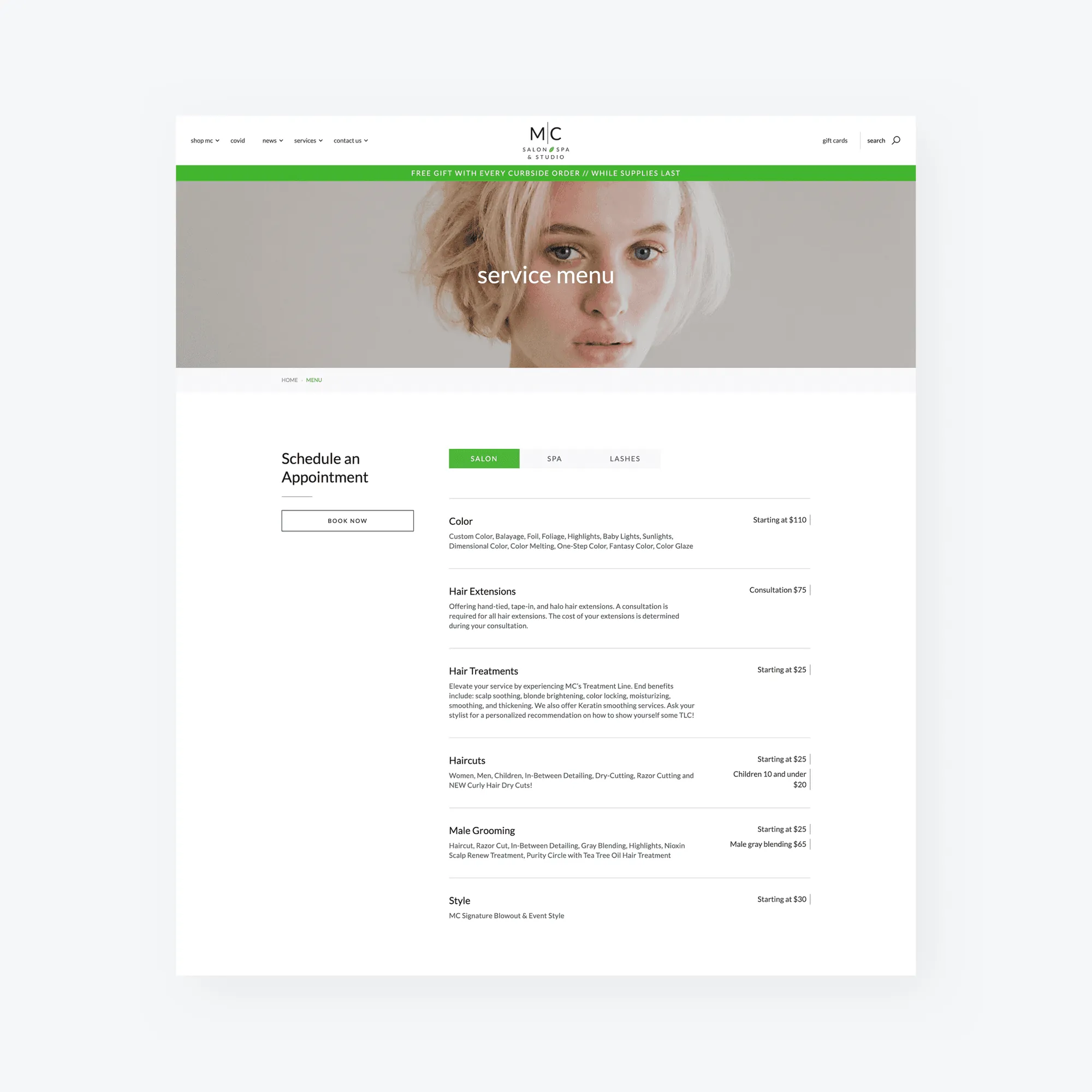

A Structure Built to Grow
The decision that shaped everything else was building most of the site on the Webflow CMS instead of as individual pages. A CMS stores content as structured entries, a bit like rows in a spreadsheet, and the site generates pages from templates. Products, brands, and staff each became their own collection, and each collection has one template that lays out every item the same way.
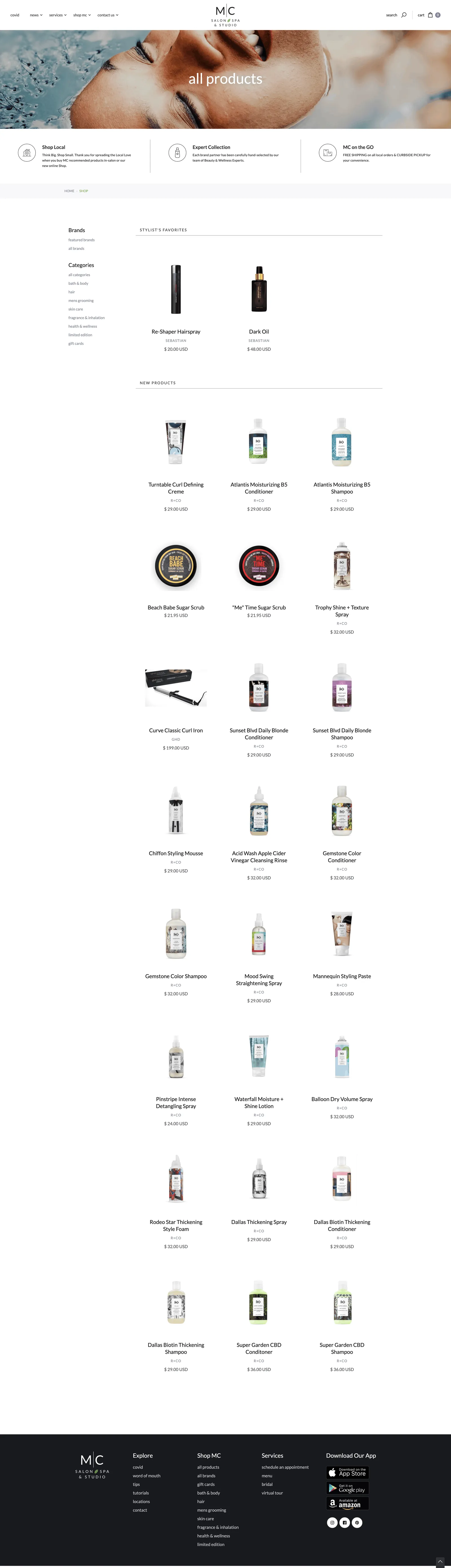
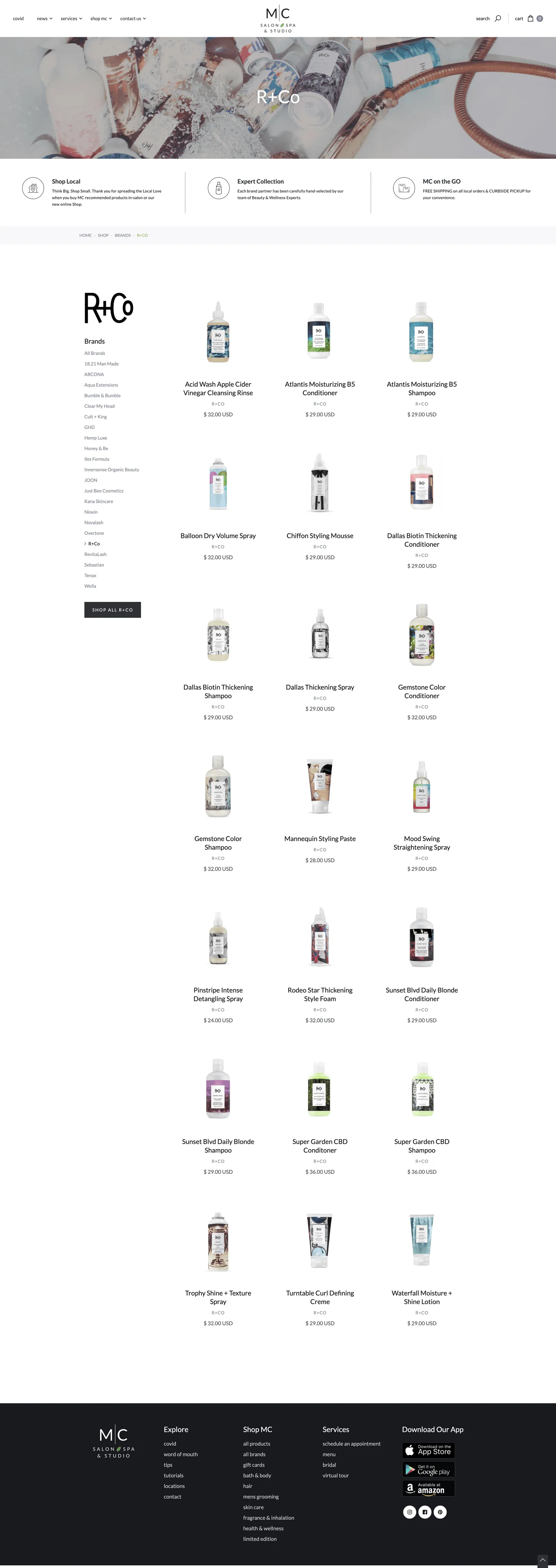
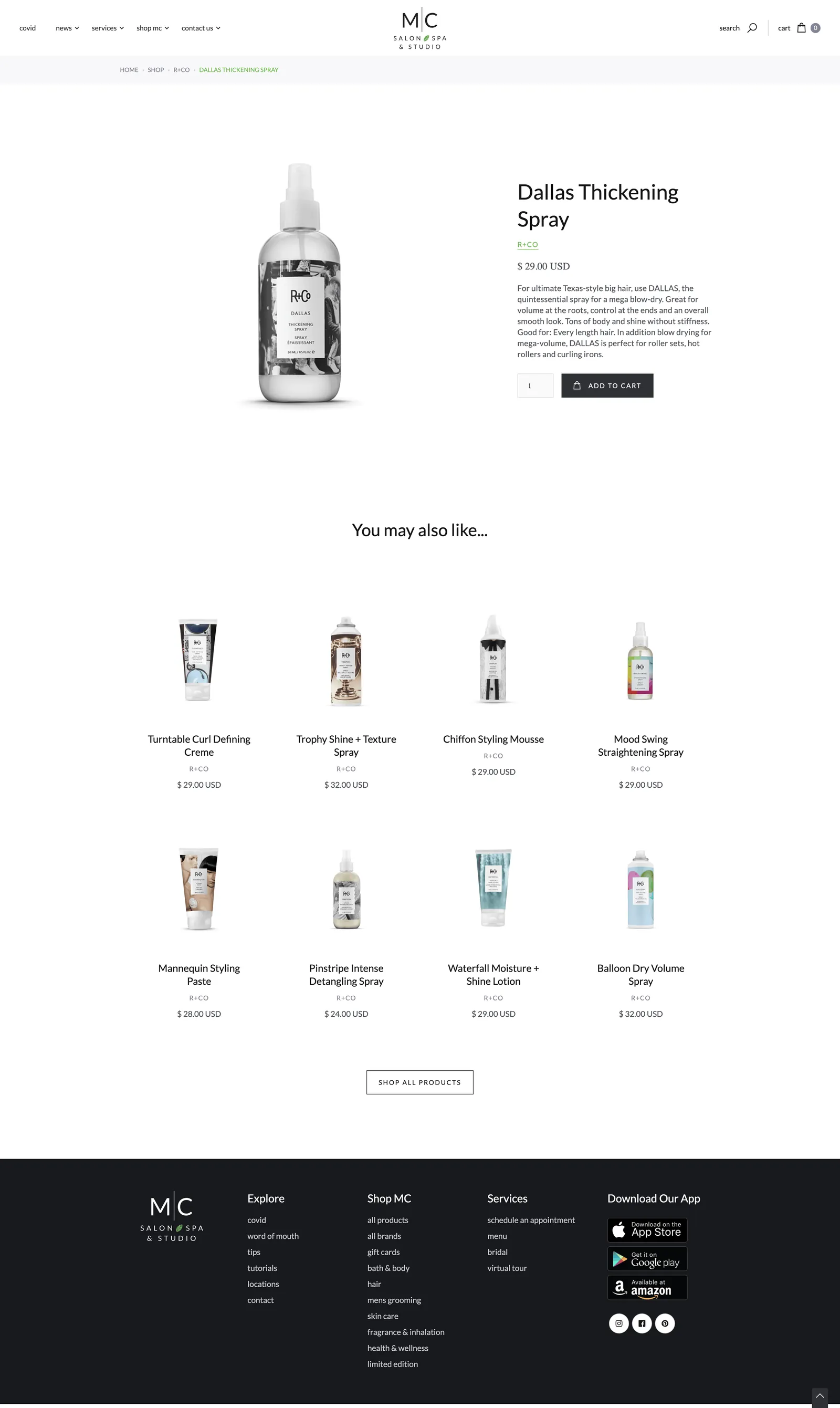
The collections are connected. Products are tied to their brand, so a brand page like R+Co pulls in only that brand's products, and each product page fills its "You may also like" row from the same catalog. Shoppers can filter the full catalog by brand and category.
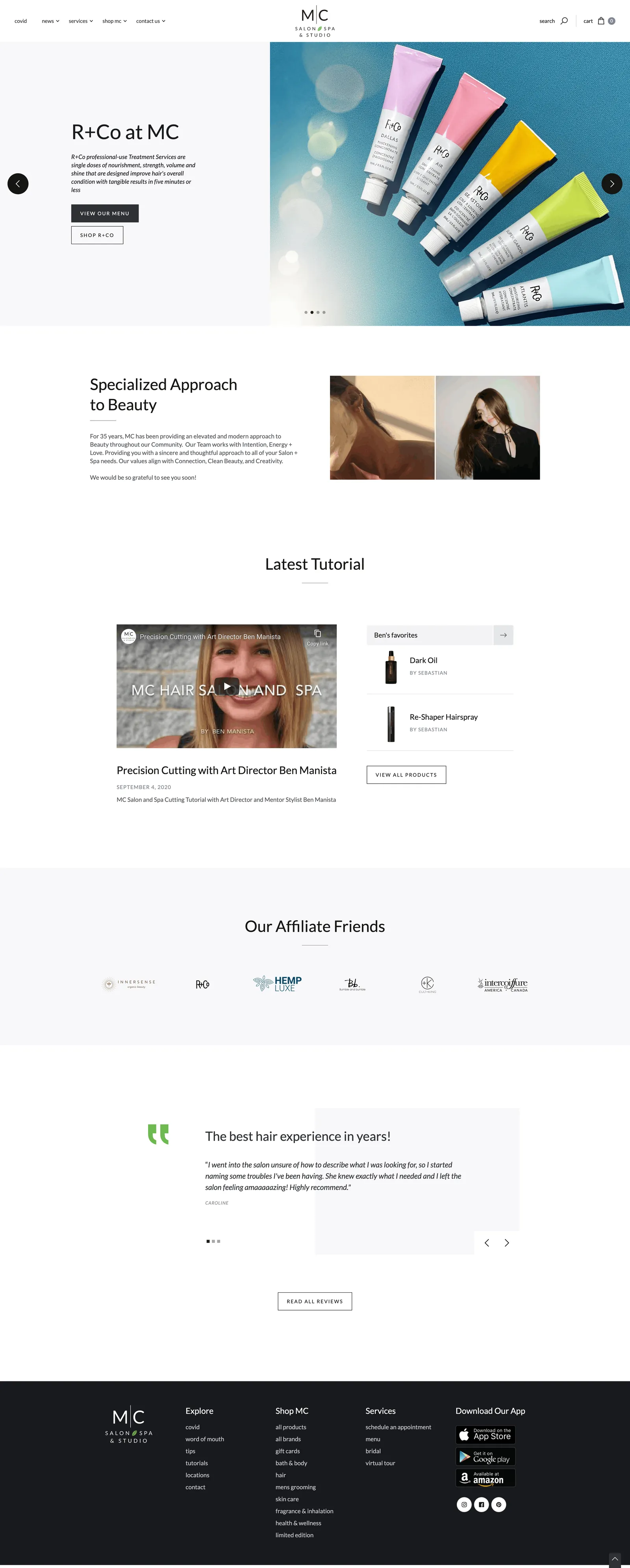
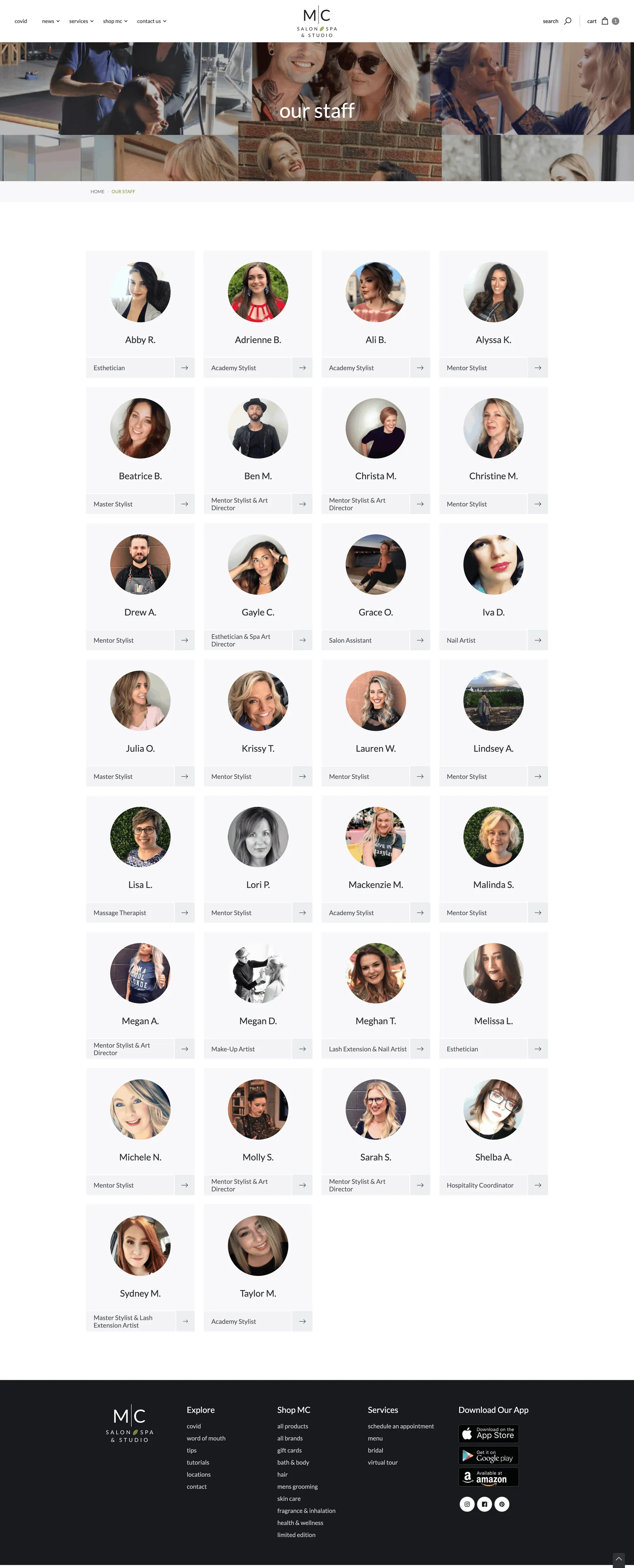
That structure is what let the site keep up with the business. By the time of the captures below, the staff page alone held thirty stylists, estheticians, and artists. Adding a stylist, a product, or a brand meant filling in an entry, not asking me to build a new page, and the new entry showed up everywhere it belonged.
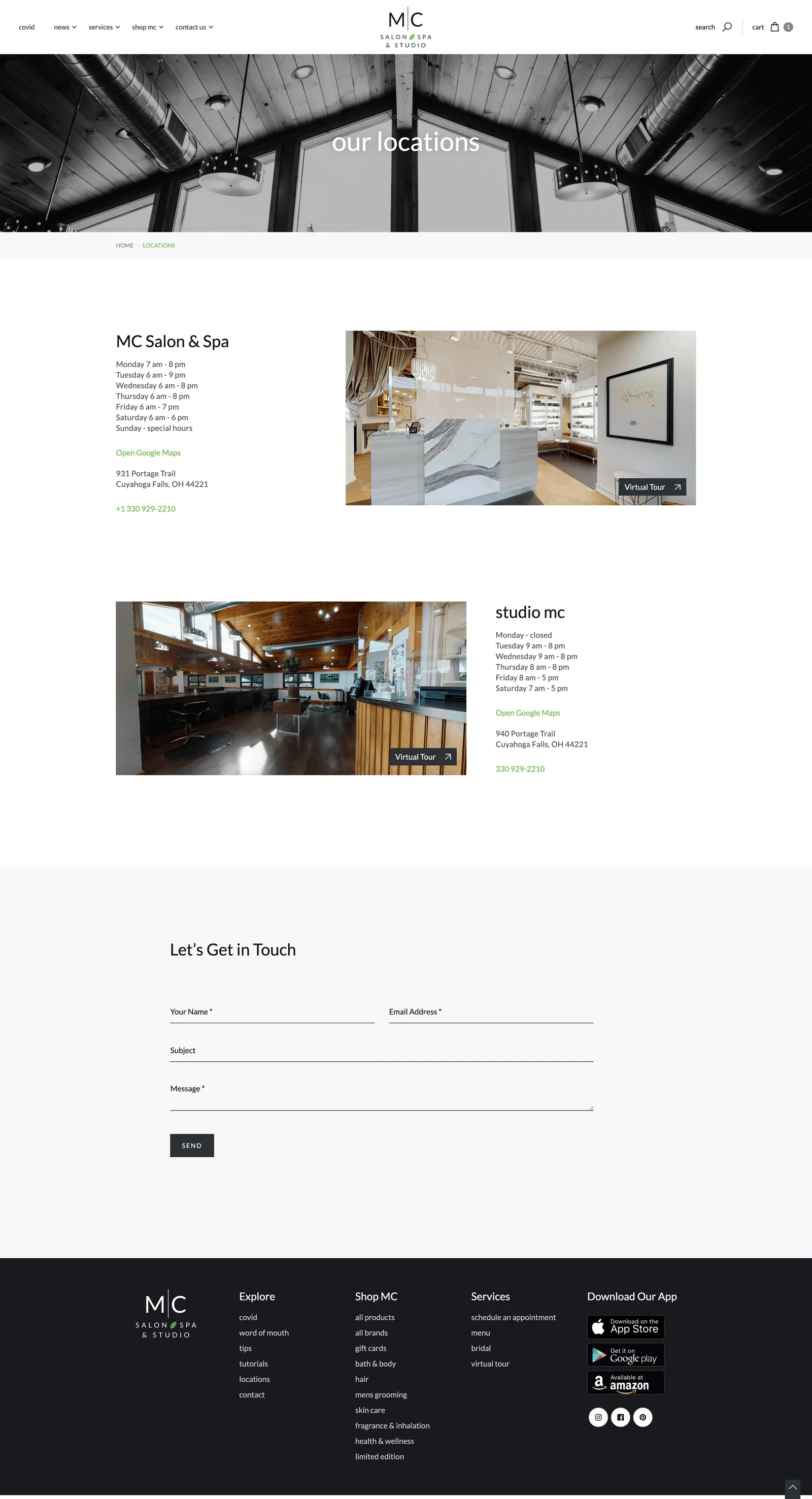
These are full-page captures of the live site before it came down. Click any of them to scroll the whole page.
Webflow for the Experience, Shopify for Checkout
A couple of weeks after launch, Stripe, the store's payment processor, flagged it for carrying CBD products and terminated the account. The store could no longer take payments through Stripe, and with so much of the site built around the catalog, scrapping the ecommerce pages wasn't an option.
So I went headless, splitting the job between two platforms. Webflow stayed the front end: the design, the pages, and the CMS catalog with its brands, templates, and related products. Shopify became the back end, where the products, checkout, and orders lived.
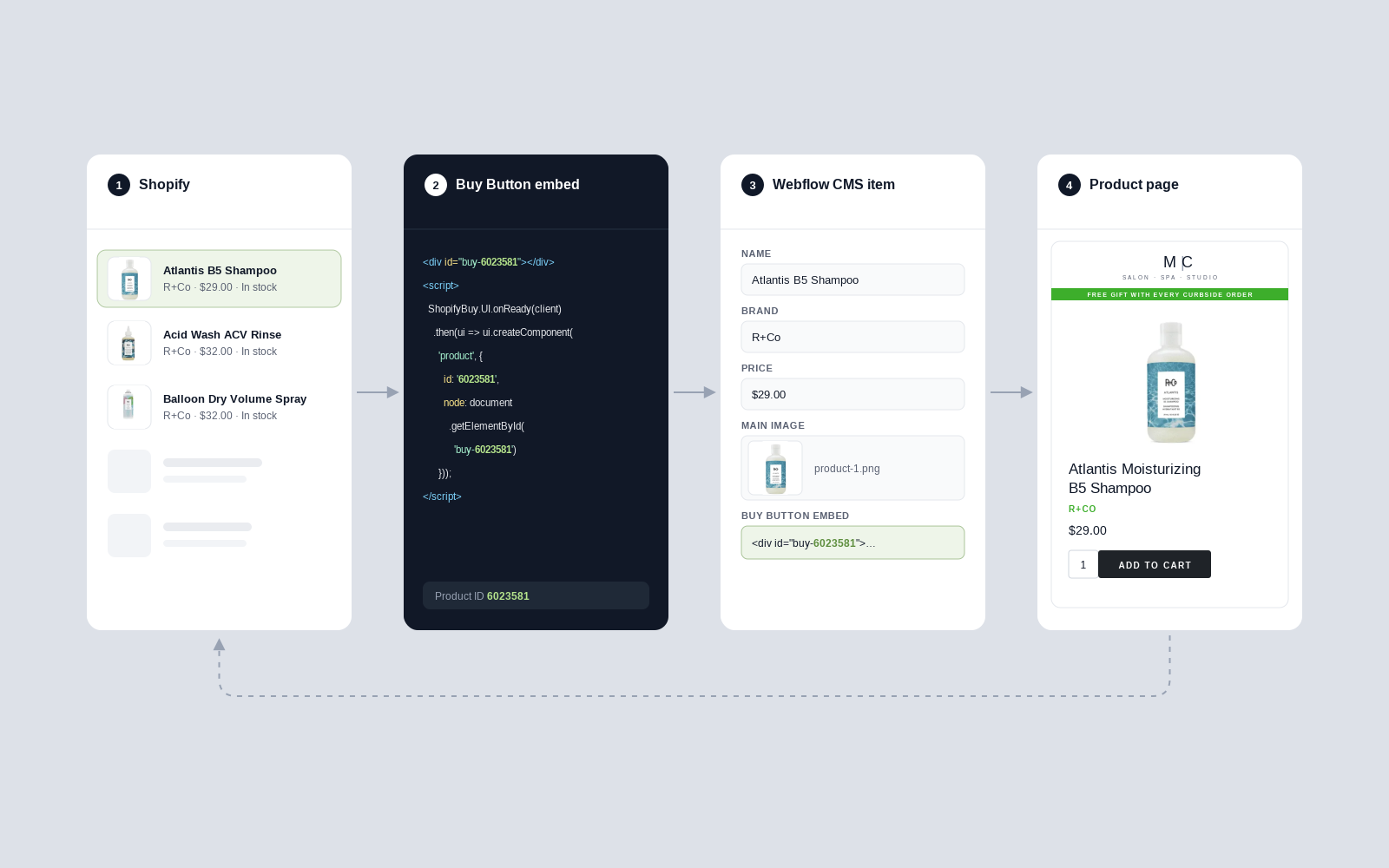
Connecting them was the technical, tedious part. Every product was uploaded to Shopify, and each product item in the Webflow CMS got its own Shopify Buy Button embed, with the unique code for that product saved on the item. The quicker route would have been one big embedded Shopify store in an iframe. Instead, each product page output its own product dynamically from its CMS item, so the brand pages, filters, and related products kept working, the store still looked like the rest of the site, and checkout ran through Shopify.
It also made the store easier for the salon to run. They managed it in Shopify and the Shopify app without touching the ecommerce pages, and the site kept up on its own.
Where It Ended Up
What the salon got was more than a bigger website. Clients could explore services, meet the staff, find either location, and shop the products their stylists use, all in one place. Behind that, a CMS structure let the team and catalog grow without new pages, and a Webflow and Shopify setup kept the store selling after its payment processor dropped it. The salon ran it day to day themselves, in Webflow for their content and Shopify for the store.
The owners sold the business in 2024, and the site is now run by someone else on a different platform, so these captures are the record of this version.